

Table of Contents
Farming Catfish For A Beginner
Fish farming in general requires an individual to undergo intensive training and practical theory in order to yield healthy fish. Catfish farming is very simple for a beginner in aquaculture especially when starting it at backyard farming level.
Recommendations For Starting Farming
Build a pond which can be earthen pond or an above ground pond. You can also use a transparent tank.
Connect your pond or tank to clean water source.
Purchase your fingerlings catfish from breeders.
Purchase feed for your fish.
Start your aqua farm.
Methods Of Fish Farming
Fish farming may range from ‘backyard’ subsistence ponds to large scale industrial enterprises. Farming systems can be expressed in terms of input levels which are;
- Intensive fish farming – the fish are kept at too high stocking density to obtain significant amounts of feed from their environment.
- Semi-intensive fish farming – aims at increasing the production of fish from ponds system beyond the level supported by food which is naturally available through use of supplementary feeds.
- Extensive fish farming – this method uses system of culture and rearing in which human intervention is concentrated on reproduction of stock in addition to capture.
Breeding Catfish At Home
You can raise catfish in tanks, underwater cages and other vessels, but whichever way you choose to raise your fish, make sure that your fish are bred in a large holder that can accommodate more catfish.
In some cases, aqua farmers may use different type’s fish keeping method which could be;
- Ponds – earth pond is stagnant, free flow concrete pond and water recirculatory concrete pond.
- Tanks – plastic or concrete tanks.
- Cages – pen cages that deter poaching.
Pond Construction
Earthen ponds are encouraged for an aqua farmer in your backyard as aqua water is harvested from the ponds and used in vegetable growing gardens which enrich the vegetation.
Construct your pond as per the number of fingerlings you may want to start with and the pond specifications must be adhered to in order to get a good produce.
For pond construction, a sizeable land is required whereby the pond will be 85 percent will contain water and the rest will be in levees, storage buildings, drains, etc. Pond construction requires the following to be done;
- Site preparation – Area designated for pond construction, vegetation will be removed and channel banks and sharp breaks are sloped to a certain steep.
- So all cleared and grubbed material shall be disposed of outside and below the limits of the dam and reservoir as directed by the owner or his representative.
- When specified, a sufficient quantity of topsoil will be stockpiled in a suitable location for use on the embankment and other designated areas.
- Drainage structure – allow fir a drainage canal on one side of the pond to create an allowance for carrying the water away from the pond.
- The pond must be drained by a pipe fitted with a gate and screen. The pipe must be large enough to allow pond to be completely drained in 5 – 7 days.
- Earth fills – the material used must be free of roots, stumps, wood, rubbish, stones larger than 16 centimetres and any other objects that will be problematic on the ground.
- Consider the principal spillway must be installed concurrently with fill placement and not excavated into the embankment.
The soil must be compacted in a way that will enable sufficient moisture such that the required degree of compaction will be obtained with the equipment used.
When earth filling, make sure that the bottom width of the trench shall be governed by the equipment used for excavation, with the minimum width being four feet.
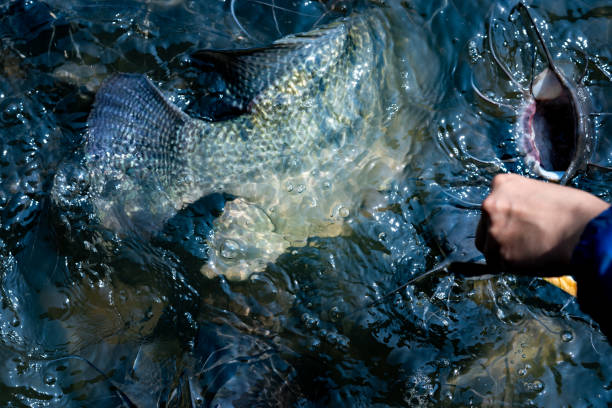
Feeding food for fish in river nature farming
- Vegetative cover – the seed exposed in the area of levees to quickly ascertain reduction of erosion problems. The soil type for the vegetation is determined by the climate in your area.
- Add lime and fertilizer for the seed growth.
- Water supply – You must have a dependable supply of water free of fish and pollutants. How To Raise Catfish. The depth and size of the well will determine the size of the pump, length of casing and screen needed.
- Water must be pumped to fill the pond and then added throughput the year to replace water lost by evaporation. Also consider that water will be replaced at least two or three times during the year for management purposes.
- Ensure that the water is most dense at 39.5 degrees Fahrenheit (4 degrees Celsius) which indicates the water is lighter.
Brief Catfish Facts
- They are monogamous which means they mate with one fish.
- The whisks are like their sensory organs which are called barbells.
- The catfish species differ in colour but may exhibit some similar features such as their whisks.
- Adult catfish are usually solitary fish.
- When they nest, the fingerlings stay in the nest for a week and the fry will stay in a school (crevice) for two to three weeks being guarded by the father.
- Catfish never stops growing which means the larger the fish the older it is.
- Even though catfish are bottom feeders, they sometimes feed from the surface.
- Catfish depend on the sun as the source of energy. The sun regulates the water temperatures which enables them to perform well in slightly warm water.
- Catfish farming requires patience and attention because anything can happen when fish are not monitored daily throughout 24 hours. It is easy to have tons of fish dying and not knowing when and how they died.
- Make sure that when bringing in fingerlings, the water temperature is the same as where they were collected otherwise they will die from stress.
- Never overstock your pond as a beginner because this will lead to stunted growth on the fish.
Quick Growth
There are ways that can be done to encourage quick growth of catfish. Let’s have at look;
Purchase juvenile fish
Make sure they are shooters
Avoid overstocking
Verify the source of the water
Include an inlet and outlet in your drainage system
Buy quality feed high in protein and soy rich feed
Use live bait when fishing.

frequently asked questions (FAQs) on catfish farming for beginners, along with concise answers to help you get started:
1. What is the best catfish species for farming?
- Answer: The African catfish (Clarias gariepinus) and Channel catfish (Ictalurus punctatus) are popular due to their fast growth, hardiness, and high market demand.
2. What type of pond is suitable for catfish farming?
- Answer: Earthen ponds, concrete tanks, or plastic/rubber tanks can be used. Ensure good water depth (3–5 ft), proper drainage, and aeration.
3. How do I source quality fingerlings?
- Answer: Buy from reputable hatcheries to avoid diseases. Look for active, uniformly sized fingerlings (4–6 weeks old).
4. What should I feed my catfish?
- Answer: Use commercial floating pellets (30–45% protein for juveniles, 25–28% for adults). Feed 2–3 times daily (3–5% of body weight).
5. How long does it take for catfish to mature?
- Answer: Under good conditions, catfish reach market size (1–1.5 kg) in 5–8 months, depending on feeding and water quality.
6. How do I maintain good water quality?
- Answer:
- Monitor pH (6.5–8.5) and ammonia levels.
- Change 20–30% of water weekly.
- Use aerators to prevent oxygen depletion.
7. What are common catfish diseases, and how can I prevent them?
- Answer:
- Common diseases: Ulcers, fin rot, parasites, and bacterial infections.
- Prevention: Maintain clean water, avoid overcrowding, and quarantine new stock.
8. How many catfish can I stock per square meter?
- Answer:
- Earthen ponds: 5–10 fish/m².
- Tanks: 50–100 fish/m³ (with aeration).
- Overcrowding increases disease risk.
9. How do I harvest catfish?
- Answer:
- Drain ponds partially or use nets.
- Harvest when fish reach market size (usually 6–8 months).
- Fast for 1 day before harvesting to reduce waste in guts.
10. Is catfish farming profitable?
- Answer: Yes, if managed well! Key factors:
- Low feed costs (use quality feed).
- High survival rate (≥80%).
- Good market demand (restaurants, fish markets).