
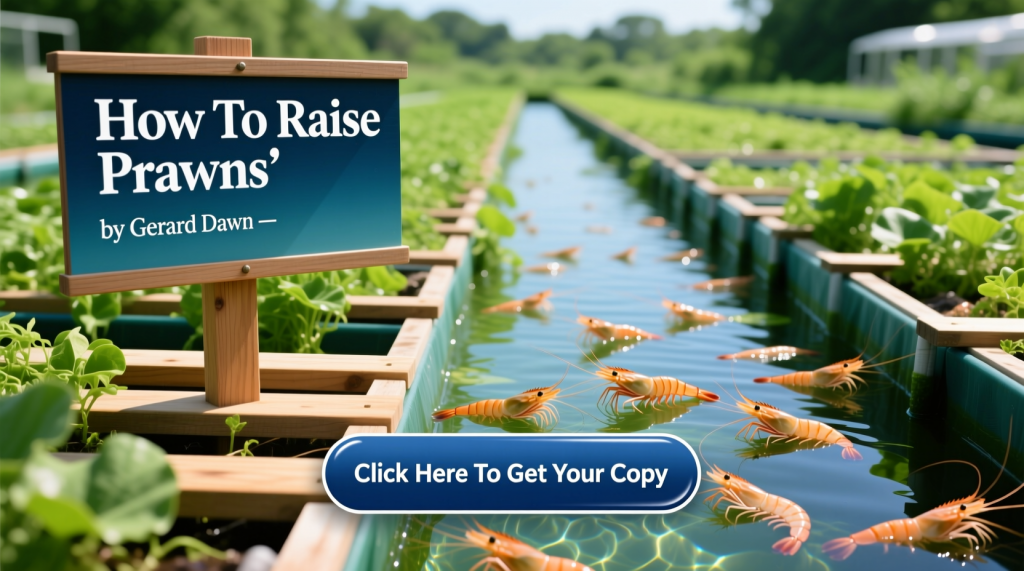
Prawn farming is a lucrative agribusiness venture with high demand in local and international markets. With proper planning, small-scale prawn farming can generate significant profits while requiring relatively low startup costs compared to other aquaculture businesses.
This information above will walk you through the essential steps to start a profitable small-scale prawn farming business, covering:
- Understanding Prawn Farming Basics
- Market Research and Business Planning
- Selecting the Right Prawn Species
- Choosing an Ideal Location
- Setting Up Your Prawn Farm
- Water Quality and Pond Management
- Stocking and Feeding Practices
- Disease Prevention and Health Management
- Harvesting and Post-Harvest Handling
- Marketing and Selling Your Prawns
- Financial Planning and Profitability Analysis
By the end of this guide, you’ll have a clear roadmap to launch and sustain a profitable prawn farming business.
Table of Contents
1. Understanding Prawn Farming Basics
Prawn farming, also known as freshwater or marine shrimp farming, involves raising prawns in controlled environments such as ponds, tanks, or cages. The most commonly farmed species include:
- Giant Freshwater Prawn (Macrobrachium rosenbergii) – Ideal for small-scale farming due to its hardiness.
- Pacific White Shrimp (Litopenaeus vannamei) – Fast-growing and highly marketable.
- Black Tiger Shrimp (Penaeus monodon) – Preferred for export markets but requires more intensive farming.
Prawns thrive in warm, clean water with proper aeration and feeding. The farming cycle typically lasts 3-6 months, depending on species and growth conditions.
2. Market Research and Business Planning
Before investing, conduct thorough market research to:
- Identify demand – Check local seafood markets, restaurants, and export opportunities.
- Analyze competitors – Understand pricing, supply gaps, and customer preferences.
- Determine pricing strategy – Farmgate price vs. retail price.
- Choose distribution channels – Direct sales, wholesalers, or online platforms.
Creating a Business Plan
A solid business plan should include:
- Startup costs (land, pond construction, seed, feed, labor)
- Operational costs (feed, water treatment, electricity)
- Revenue projections (based on harvest cycles and market prices)
- Risk management (disease outbreaks, price fluctuations)
3. Selecting the Right Prawn Species
The best species for small-scale farming are:
A. Giant Freshwater Prawn (Macrobrachium rosenbergii)
✔ Pros:
- Tolerates varying water conditions
- High survival rate
- Strong demand in local markets
✖ Cons:
- Slower growth compared to marine shrimp
B. Pacific White Shrimp (Litopenaeus vannamei)
✔ Pros:
- Fast growth (harvest in 3-4 months)
- High market value (export potential)
✖ Cons:
- Requires strict water quality control
Choose based on your climate, market demand, and farming expertise.
4. Choosing an Ideal Location
Key factors for selecting a farm site:
✅ Water Source – Reliable freshwater or brackish water supply (rivers, boreholes).
✅ Soil Quality – Clay or loamy soil to prevent water leakage.
✅ Accessibility – Near transport routes for easy market access.
✅ Climate – Warm temperatures (25-32°C) for optimal growth.
Avoid flood-prone or polluted areas.
5. Setting Up Your Prawn Farm
A. Pond Construction
- Earthen ponds (most common for small-scale farming)
- Size: 0.1 to 0.5 hectares
- Depth: 1-1.5 meters
- Slope for easy drainage
- Liner Ponds (for areas with sandy soil)
- Use HDPE liners to prevent seepage
- Tank or Cage Systems (for limited space)
- Requires constant aeration
B. Water Management System
- Inlet and outlet pipes for water exchange
- Aeration (paddlewheel or air pumps)
- Fencing to prevent predators
6. Water Quality and Pond Management
Maintaining optimal water conditions is crucial:
| Parameter | Optimal Range |
|---|---|
| Temperature | 28-32°C |
| pH Level | 7.0-8.5 |
| Dissolved Oxygen | >5 mg/L |
| Salinity (for marine species) | 10-25 ppt |
Regular checks:
- Test water weekly.
- Remove excess algae and waste.
- Change 10-20% of water weekly.
7. Stocking and Feeding Practices
A. Stocking Juvenile Prawns (Post-Larvae)
- Source from reputable hatcheries.
- Stocking density:
- Extensive farming: 5-10 prawns/m²
- Semi-intensive: 15-25 prawns/m²
- Intensive (tanks): 50-100 prawns/m²
B. Feeding Regimen
- Commercial prawn feed (25-35% protein)
- Supplementary feed (boiled vegetables, fish meal)
- Feeding frequency: 2-3 times daily (adjust based on growth)
Overfeeding leads to water pollution; monitor consumption.
8. Disease Prevention and Health Management
Common prawn diseases:
- White Spot Syndrome Virus (WSSV) – Deadly, spreads fast.
- Bacterial infections – Black gill disease, shell rot.
Prevention Tips:
✔ Quarantine new stock before introducing.
✔ Maintain clean water and avoid overcrowding.
✔ Use probiotics to boost immunity.
9. Harvesting and Post-Harvest Handling
A. Harvesting (After 3-6 Months)
- Partial Harvesting: Remove larger prawns first.
- Complete Harvesting: Drain pond and collect all prawns.
B. Post-Harvest Handling
- Sorting: Separate by size.
- Cleaning: Rinse with clean water.
- Preservation:
- Ice storage (for fresh sales)
- Freezing (for export/long-term storage)
10. Marketing and Selling Your Prawns
A. Target Markets
- Local fish markets
- Restaurants & hotels
- Supermarkets
- Exporters (if farming marine shrimp)
B. Branding & Pricing
- Sell live, fresh, or frozen.
- Offer bulk discounts to wholesalers.
- Use social media for direct sales.
11. Financial Planning and Profitability Analysis
Startup Costs (Example for 0.5 Hectare Farm)
| Expense | Estimated Cost ($) |
|---|---|
| Land lease | 1,000 |
| Pond construction | 2,500 |
| Juvenile prawns | 800 |
| Feed (6 months) | 1,200 |
| Labor & misc. | 1,000 |
| Total | 6,500 |
Revenue Projection (Per Cycle)
- Harvest: 1,500 kg
- Selling price: $8/kg
- Revenue: $12,000
- Profit (after costs): $5,500
With 2-3 cycles per year, profits can exceed $15,000 annually.
Here are ten frequently asked questions (FAQs) about prawns:
1. What is the difference between prawns and shrimp?
Prawns and shrimp are different crustaceans. Prawns have three pairs of claw-like legs, while shrimp have two. Prawns also have branching gills and a straighter body compared to shrimp.
2. Are prawns healthy to eat?
Yes, prawns are a good source of protein, low in fat, and rich in omega-3 fatty acids, vitamins (B12, E), and minerals (selenium, zinc). However, they contain cholesterol, so moderation is advised for some diets.
3. How can I tell if prawns are fresh?
Fresh prawns should have a firm texture, a mild ocean-like smell (not fishy), and a translucent appearance. Avoid prawns with black spots, a slimy texture, or a strong ammonia odor.
4. How should I store fresh prawns?
Keep fresh prawns in the coldest part of the fridge (0–4°C) and use them within 1–2 days. For longer storage, freeze them in an airtight container for up to 3 months.
5. Can you eat prawns raw?
Raw prawns can carry parasites or bacteria, so it’s safer to cook them thoroughly. If consuming raw (e.g., in sushi), ensure they are sashimi-grade and properly frozen to kill pathogens.
6. How do you peel and devein prawns?
- Remove the head (if attached).
- Peel off the shell, leaving the tail if desired.
- Make a shallow cut along the back and remove the dark digestive tract (vein) with a knife or toothpick.
7. What’s the best way to cook prawns?
Prawns cook quickly (2–3 minutes per side) and can be grilled, boiled, fried, or sautéed. Overcooking makes them rubbery—they’re done when they turn opaque and pink.
8. Why do prawns turn pink when cooked?
The color change is due to a protein called astaxanthin, which is naturally present in prawns but bound to other molecules. Heat releases astaxanthin, turning the prawns pink.
9. Are prawns safe for people with shellfish allergies?
No. Prawns are shellfish, and people with shellfish allergies should avoid them as they can trigger severe allergic reactions.
10. Are farmed or wild-caught prawns better?
- Wild prawns are often considered tastier but may have sustainability concerns.
- Farmed prawns can be more eco-friendly if responsibly sourced (look for certifications like ASC or MSC), but some farms use antibiotics or harm mangroves.